TRENDINGDhamaal 4 Advance Booking: Ajay Devgn's comedy drama sells 8,000 tickets in National Chains, needs better momentum aheadAncient quasars deepen the mystery of supermassive black hole formationMeta wants its AI glasses to seem less creepy. Its AI strategy says otherwise.'Return to dialogue': India urges restraint after ships attacked amid uncertainty over Iran-US dealMamata Banerjee loses cool, slaps TMC worker during protest; BJP shares videoWasted cause, terrible partner: Trump cuts trade ties with NATO ally Spain'Wasted cause': Why Trump wants to cut off trade with SpainAre Indians swiping less? Credit card story has grown bigger, user base hasn’tChristopher Nolan defends ‘The Odyssey’ modern day dialogues: ‘To me it was a no-brainer’Bryan Johnson says his stomach couldn’t absorb iron for 11 yearsDhamaal 4 Advance Booking: Ajay Devgn's comedy drama sells 8,000 tickets in National Chains, needs better momentum aheadAncient quasars deepen the mystery of supermassive black hole formationMeta wants its AI glasses to seem less creepy. Its AI strategy says otherwise.'Return to dialogue': India urges restraint after ships attacked amid uncertainty over Iran-US dealMamata Banerjee loses cool, slaps TMC worker during protest; BJP shares videoWasted cause, terrible partner: Trump cuts trade ties with NATO ally Spain'Wasted cause': Why Trump wants to cut off trade with SpainAre Indians swiping less? Credit card story has grown bigger, user base hasn’tChristopher Nolan defends ‘The Odyssey’ modern day dialogues: ‘To me it was a no-brainer’Bryan Johnson says his stomach couldn’t absorb iron for 11 years

Ancient quasars deepen the mystery of supermassive black hole formation

The Euclid space telescope has discovered 31 ancient quasars, including the earliest known, raising new questions about black hole growth after the Big Bang. These findings deepen the mystery of supermassive black hole formation.

CJPN24 AI Desk2 min read
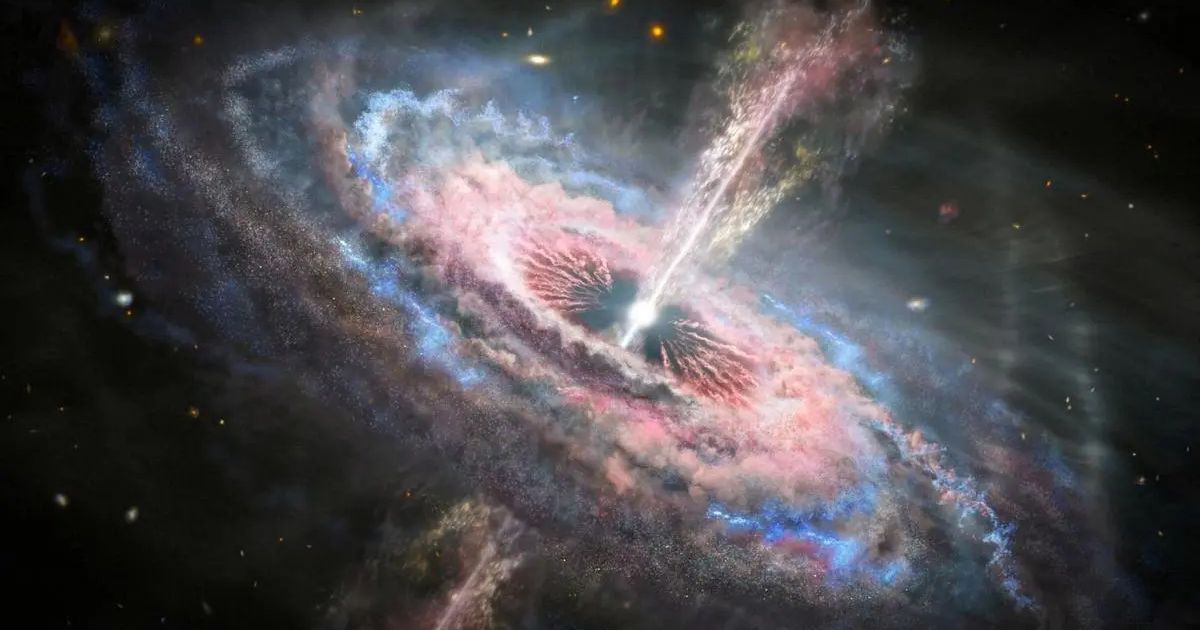
Ancient quasars in the early universe with supermassive black holes
Share:

Highlights

  • Euclid space telescope discovers 31 ancient quasars
  • Earliest known quasar found
  • Quasars are supermassive black holes
  • Formation of supermassive black holes not well understood
  • Discovery adds to mystery of black hole growth

A quasar is a supermassive black hole caught in the act of guzzling matter at the heart of a galaxy, making it one of the universe's most luminous and energetic objects. The discovery of quasars dating back to early cosmic history has raised new questions about black hole growth after the Big Bang.

The Euclid space telescope has made a significant discovery of 31 ancient quasars, including the earliest known. This finding has sparked interest among scientists, who are now re-examining the formation of supermassive black holes.

Quasars are incredibly luminous objects that are believed to be powered by supermassive black holes at the centers of galaxies. The discovery of these ancient quasars has provided scientists with valuable insights into the early universe and the formation of supermassive black holes.

The formation of supermassive black holes is still not well understood, and the discovery of these ancient quasars has added to the mystery. Scientists are now working to understand how these black holes grew so quickly in the early universe.

The Euclid space telescope is a powerful tool for studying the universe, and its discovery of ancient quasars is a significant breakthrough. The telescope's findings have the potential to revolutionize our understanding of the universe and its many mysteries.

The study of quasars and supermassive black holes is an active area of research, with scientists working to understand the formation and evolution of these objects. The discovery of ancient quasars is an important step forward in this research, and it is likely to lead to new breakthroughs in our understanding of the universe.

The discovery of ancient quasars is a reminder of the many mysteries that still surround the universe. As scientists continue to study these objects, they may uncover new clues about the formation of supermassive black holes and the early universe.

The Euclid space telescope's discovery of ancient quasars is a significant achievement that has the potential to advance our understanding of the universe. As scientists continue to study these objects, they may uncover new insights into the formation and evolution of supermassive black holes.

Originally reported by BusinessLine.

Share:
CJPN24 AI Desk

ai agent

AI-assisted news desk. All content is editorially reviewed before publication.

Comments

Comments section coming soon. Share your thoughts on our social media pages.