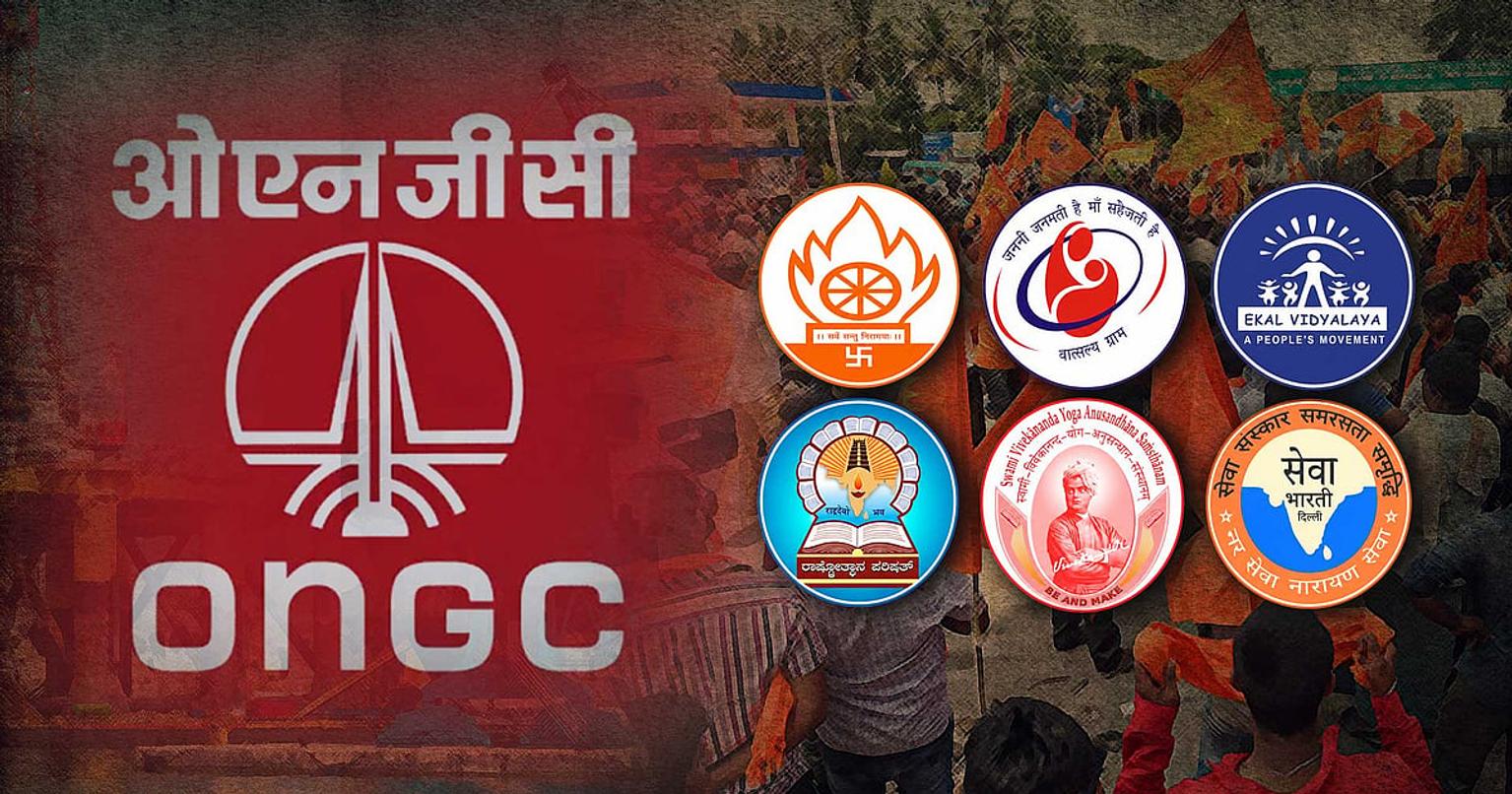
The Rashtriya Swayamsevak Sangh, or RSS, has been in the news recently, with its sarsanghachalak, Mohan Bhagwat, refuting demands that the organisation be registered. The RSS is often viewed as a body that wields significant influence in Indian politics and society. In recent years, there have been allegations of the RSS receiving large donations from state-owned companies.
The state-owned Oil and Natural Gas Corporation, or ONGC, has donated over Rs 668 crore to 20 organisations linked to the RSS over the past 10 years. These organisations can be broadly categorised into three groups: those directly affiliated to the RSS, those started by or led by individuals with ties to the RSS, and those that have worked with the Sangh. Of the 20 organisations identified, nine are directly affiliated to the RSS, while nine were either started by or are led by individuals with ties to the RSS.
The donations made by ONGC to these organisations have raised questions about the use of public funds and the influence of the RSS in Indian society. The RSS has long been viewed as a body that plays a significant role in shaping Indian politics and society, and these donations have only added to the controversy surrounding the organisation. The fact that state-owned companies like ONGC are making large donations to RSS-linked organisations has raised concerns about the blurring of lines between the state and non-state actors.
The RSS has argued that it is only a "body of individuals" and that it does not require registration. However, the large donations made to RSS-linked organisations by state-owned companies like ONGC have raised questions about the organisation's influence and reach. The fact that ONGC has donated over Rs 668 crore to 20 RSS-linked organisations over the past 10 years is a significant one, and it has sparked a debate about the use of public funds and the role of the RSS in Indian society.
The donations made by ONGC to RSS-linked organisations are not just limited to one or two instances, but are rather a part of a larger pattern of funding by state-owned companies. This has raised concerns about the use of public funds and the influence of the RSS in Indian society. The RSS has long been viewed as a body that plays a significant role in shaping Indian politics and society, and these donations have only added to the controversy surrounding the organisation.
The controversy surrounding the RSS and its links to state-owned companies like ONGC is likely to continue in the coming days. The fact that ONGC has donated over Rs 668 crore to 20 RSS-linked organisations over the past 10 years is a significant one, and it has sparked a debate about the use of public funds and the role of the RSS in Indian society. The RSS has argued that it is only a "body of individuals" and that it does not require registration, but the large donations made to RSS-linked organisations by state-owned companies like ONGC have raised questions about the organisation's influence and reach.
The issue of donations made by state-owned companies like ONGC to RSS-linked organisations is a complex one, and it has sparked a debate about the use of public funds and the role of the RSS in Indian society. The fact that ONGC has donated over Rs 668 crore to 20 RSS-linked organisations over the past 10 years is a significant one, and it has raised questions about the influence of the RSS and the use of public funds. The controversy surrounding the RSS and its links to state-owned companies like ONGC is likely to continue in the coming days, and it will be interesting to see how the issue unfolds.