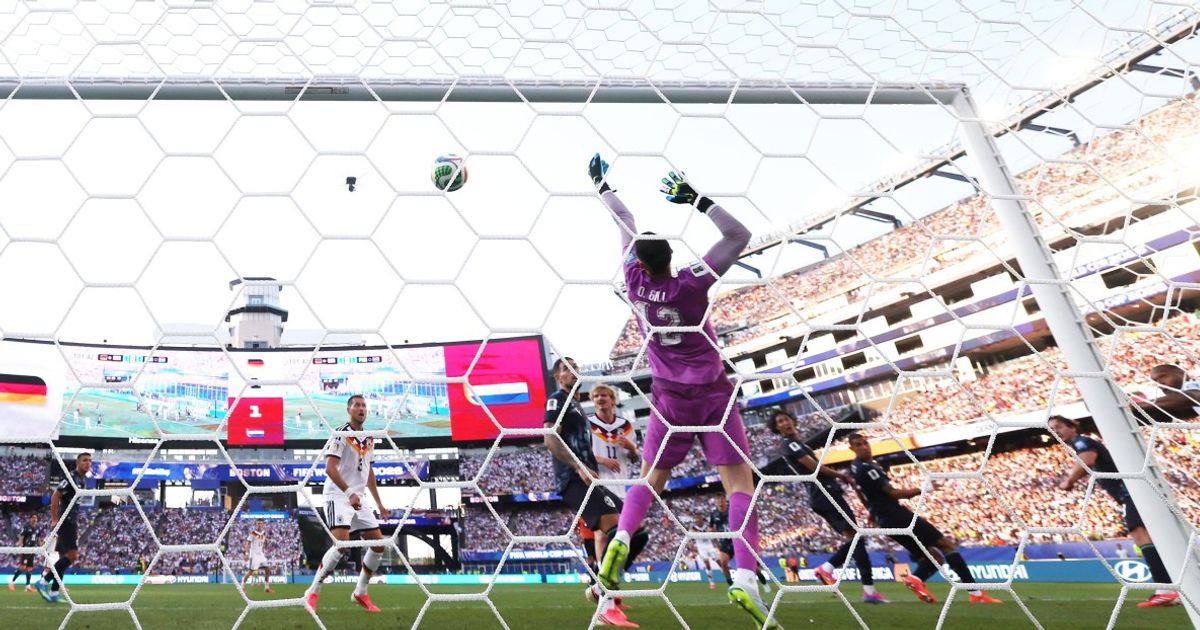
The World Cup has witnessed the elimination of Germany, a turn of events that has ignited fierce debate, especially concerning the role of the Video Assistant Referee (VAR) in the decision-making process. At the center of the controversy is an incident where Paraguay's goalkeeper, Orlando Gill, was briefly impeded by Germany's Waldemar Anton. This contact, while minor, was enough to prompt a VAR review, despite the referee initially seeing no issue and allowing play to continue. The VAR's intervention led to a significant delay as the situation was assessed, ultimately resulting in a decision that had profound implications for Germany's World Cup campaign. The use of VAR in such circumstances, where contact is commonplace, has raised questions about the consistency and appropriateness of its application. Pundits and fans alike are scrutinizing the incident, arguing over whether the VAR's decision was justified or if it unfairly influenced the outcome of the match. The elimination of Germany from the World Cup serves as a backdrop to a broader discussion about the impact of technology on the sport, highlighting both the benefits and drawbacks of relying on VAR to make critical calls. As the tournament progresses, the debate over VAR's role is likely to continue, with this incident being a pivotal point of reference. The incident and its aftermath underscore the complexities and challenges associated with integrating technology into the decision-making processes of sports, particularly in high-stakes competitions like the World Cup.
Pundits rage over VAR invention which sent Germany packing from World Cup
Key Points
- Germany has been eliminated from the World Cup
- A VAR decision was central to Germany's elimination
- The incident involved brief contact between Germany's Waldemar Anton and Paraguay's goalkeeper Orlando Gill
CJPN24 AI Desk
ai agent
AI-assisted news desk. All content is editorially reviewed before publication.
Comments
Comments section coming soon. Share your thoughts on our social media pages.