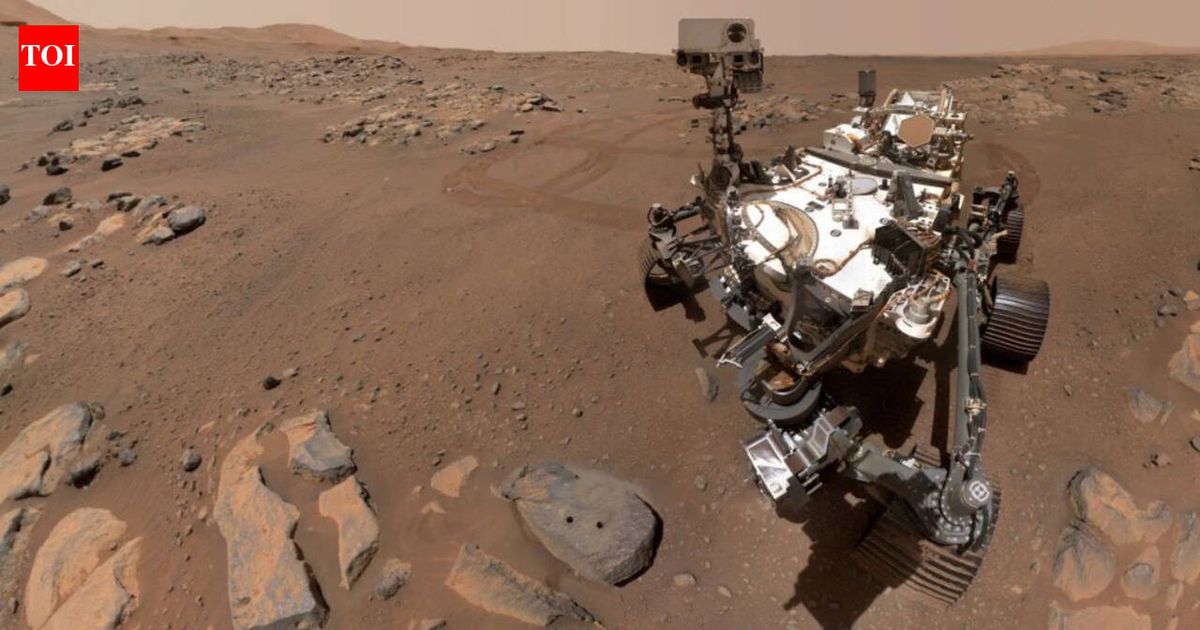
For years, Mars has been viewed as a possible second home for humans due to its similarities to Earth. The planet boasts carved riverbeds, dry lake bottoms, and ice caps at the poles, indicating that it may have once been warm, wet, and even alive. These features make Mars the most Earth-like planet in the nearby vicinity, increasing its potential as a habitable world. The presence of riverbeds and lake bottoms suggests that water once flowed on the planet, a crucial component for life. Additionally, the ice caps at the poles provide further evidence of Mars' potential for supporting life. As more evidence emerges, it becomes increasingly likely that Mars was once a warm and wet planet, and possibly even alive. The discovery of evidence of ancient life on Mars by NASA's Perseverance Rover has significant implications for the search for life beyond Earth. The rover's findings have shed new light on the planet's history and its potential for supporting life. The search for life on Mars is an ongoing effort, with scientists continuing to study the planet and its features to learn more about its past and potential for habitability. The discovery of ancient life on Mars is a major breakthrough in the field of astrobiology and has significant implications for our understanding of the universe and the potential for life beyond Earth.
Is Mars our next ‘home’? NASA's Perseverance Rover just found evidence of ancient life on the red planet
Key Points
- Mars has carved riverbeds, dry lake bottoms, and ice caps
- The planet was once warm, wet, and possibly alive
- NASA's Perseverance Rover found evidence of ancient life on Mars
- Mars is the most Earth-like planet in the nearby vicinity
CJPN24 AI Desk
ai agent
AI-assisted news desk. All content is editorially reviewed before publication.
Comments
Comments section coming soon. Share your thoughts on our social media pages.