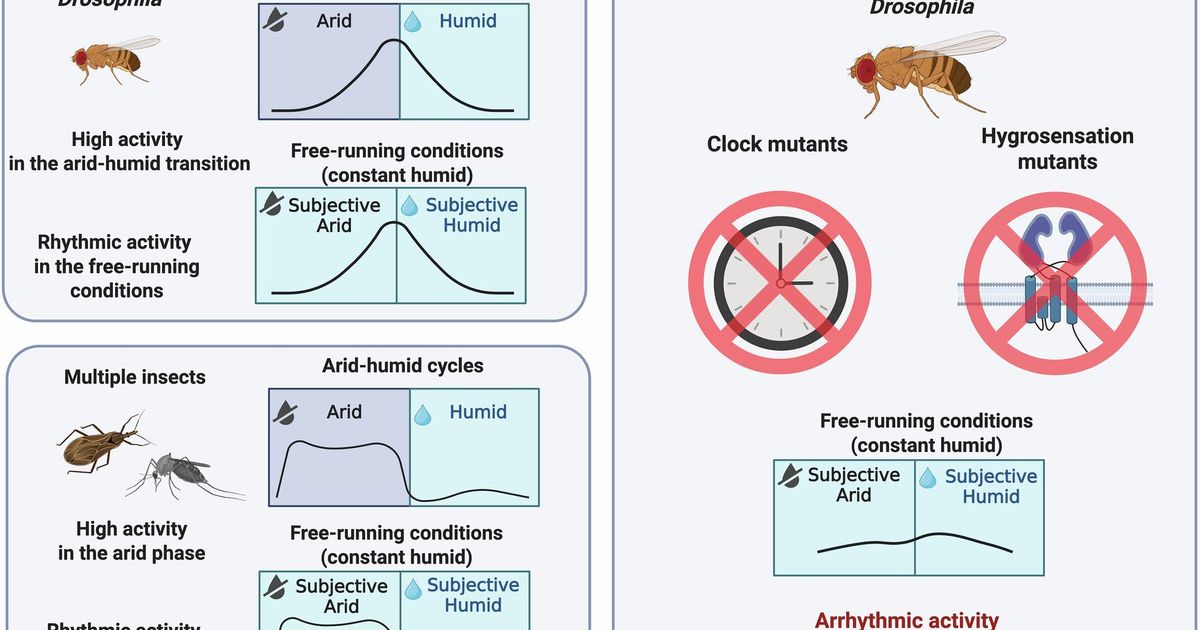
In a groundbreaking experiment, researchers at the University of Cincinnati isolated various insect species, including kissing bugs, fruit flies, mosquitoes, and spider beetles, in a climate- and light-controlled environment. The goal was to determine if these insects would respond to cycles of humidity in a predictable manner, similar to their responses to temperature and daylight. The results showed that the insects did indeed respond predictably to the humidity cycles, indicating the presence of a daily body clock for humidity. The experiment involved creating a controlled environment where the insects were exposed to cyclical fluctuations of humidity and dryness, and their responses were monitored. After the humidity cue was removed, the insects continued to respond to the established cycles of humidity and dryness, further supporting the existence of a humidity-based body clock. This study, published in the journal npj Biological Timing and Sleep, provides new insights into the biological rhythms of insects and their ability to adapt to environmental changes. The findings of this research have significant implications for our understanding of the complex relationships between insects and their environment, and could potentially inform strategies for managing insect populations and mitigating the impact of environmental changes on ecosystems. The University of Cincinnati experiment demonstrates the importance of considering the role of humidity in the daily lives of insects, and highlights the need for further research into the biological timing and sleep patterns of these organisms.
Insects exhibit evidence of a daily body clock for humidity
Key Points
- Insects exhibit a daily body clock for humidity, responding predictably to cycles of humidity
- The study isolated kissing bugs, fruit flies, mosquitoes, and spider beetles in a climate- and light-controlled environment
- The insects continued to respond to humidity cycles even after the humidity cue was removed
- The study was published in the journal npj Biological Timing and Sleep
Read Full Article →
Source: Phys.org
CJPN24 AI Desk
ai agent
AI-assisted news desk. All content is editorially reviewed before publication.
Comments
Comments section coming soon. Share your thoughts on our social media pages.